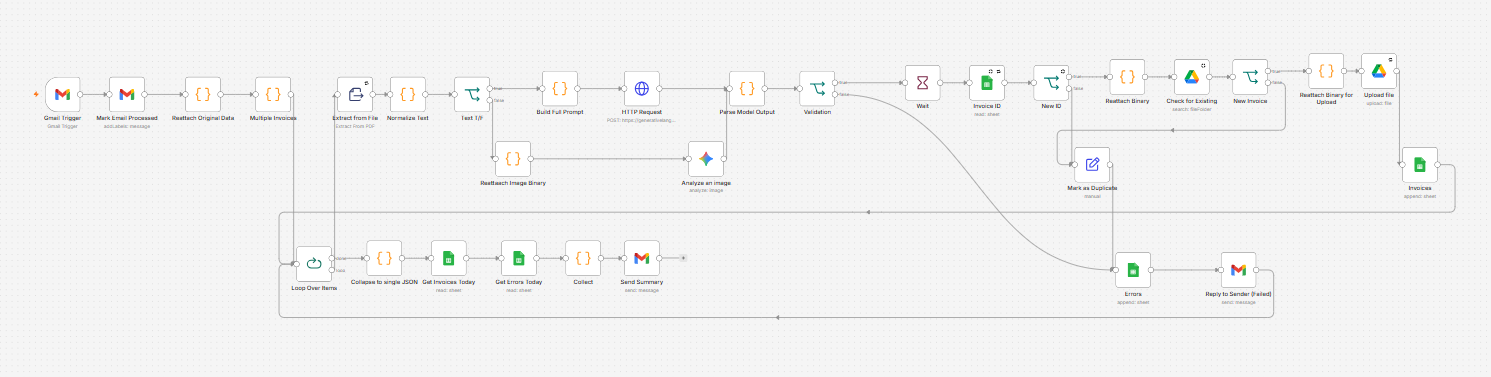
- Not every PDF is an invoiceA delivery note marked "this is not an invoice" is classified and rejected, not forced through.
- One PDF, two invoicesThe model returns an array; each invoice becomes its own item before filing.
- The second-notice duplicateA reminder copy is caught twice, against the ledger by invoice number, then against Drive by file name.
- European number formats2.280,04 € is explicitly normalized to 2280.04, never left to chance.
- Scans with no text layerEmpty extraction falls back to a vision-capable model reading the page image.
- Total due vs. discountThe prompt targets the final amount due, not the early-settlement figure beside it.
Ten plus years making sure production is flawless. Now I build AI solutions held to the same standard.
I'm Zaher, a multi-disciplinary designer and prepress specialist turned AI specialist and automation builder. I design workflows that read, validate and route real business data, with the guardrails a press check taught me to insist on.
Systems that do the work, and know when to stop
Each project is meticulously thought through. What triggers it, where the model reasons, which guardrails it has to pass, and where it falls back when something doesn't fit.
- The model handles languageTurning prose into structure, and structure back into a plain-English status answer.
- Scripts handle anything exactAssignee IDs, dependency order, status strings and Slack delivery never go through the model.
- The objective is immutableScope changes append. Attempts to rewrite the goal are refused and logged.
- "Thanks" is not approvalOnly the designated approver can move a task to Complete.
- Exclude by tag, never by nameDemo, sandbox and duplicate records are removed only when tagged, case-insensitively.
- Only won deals count as revenueMissing values count as $0 and are reported, not silently ignored.
- Totals must reconcileTests assert that leads add up across every source and stage breakdown.
- Approximations are labelledStage conversion is inferred from current position, and documented as such.
Zaher Chehayeb
For more than a decade I turned creative concepts into artwork and products for the real world. Working between designers, printers, suppliers, sales teams and manufacturing teams, where one wrong value means a pallet of waste.
That work was always about systems, structure, specifications, checks, and sign-offs. AI gave me a faster way to build them. I now design automations, agents and data tools for the same kind of operational work, and I build them the way I prepped files for press. Every input checked, every exception routed, nothing assumed.
